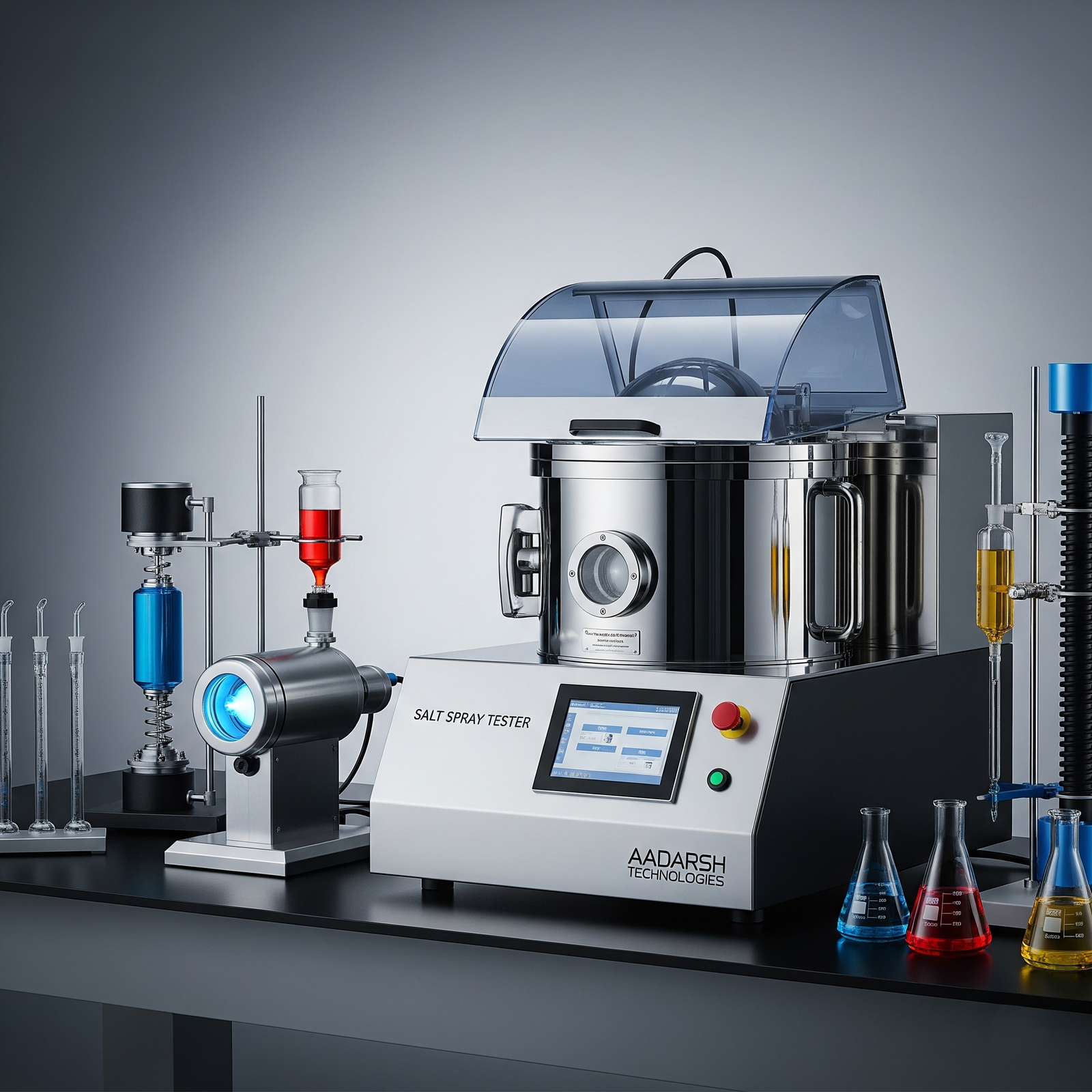
Salt Spray Tester for Corrosion Resistance Evaluation
A Salt Spray Tester is a specialized testing instrument used to evaluate the corrosion resistance of metals, protective coatings, painted surfaces, and treated components under controlled salt-fog conditions. It works by generating a fine saline mist inside a test chamber, exposing prepared specimens to a specified corrosive environment for a defined period. This process helps manufacturers assess how effectively coatings and surface treatments protect materials against corrosion, rust formation, blistering, and other visible signs of deterioration. Salt spray testing is widely used in industries such as automotive, metal fabrication, hardware, electrical equipment, fasteners, and protective coating manufacturing to support product quality assessment and compliance with relevant testing requirements.
The accuracy and repeatability of salt spray testing depend on several important parameters, including specimen preparation, salt solution concentration, chamber temperature, pH, spray conditions, exposure duration, and the applicable test standard. Proper specimen placement and consistent operating conditions are essential for obtaining meaningful and comparable results. After the specified exposure period, samples are examined for corrosion, coating damage, and other changes according to the evaluation criteria. Following established procedures, such as those outlined in applicable ASTM or ISO standards, helps laboratories maintain consistent testing practices and document results for quality-control purposes.
Laboratory Testing Solutions for Corrosion Evaluation
Adarsh Technologies provides laboratory testing instruments designed to support industrial quality control, material evaluation, and product performance assessment. A Salt Spray Tester is an important instrument for laboratories and manufacturers that need to evaluate the corrosion resistance of metal components, protective coatings, painted surfaces, and treated materials under controlled salt-fog exposure. The equipment creates a specified corrosive environment within a test chamber, allowing samples to be examined for visible rust, blistering, coating deterioration, and other signs of corrosion. These observations help quality-control teams compare protective finishes, identify potential coating weaknesses, and assess whether materials meet the relevant product specifications and acceptance criteria.
Selecting the right Salt Spray Tester Manufacturer requires careful consideration of the laboratory's testing requirements, industry standards, and expected workload. Important factors include chamber capacity, temperature control, salt solution preparation, spray consistency, exposure-time settings, specimen placement, construction materials, and ease of operation. Compatibility with applicable testing methods, such as ASTM B117 or relevant ISO standards, should also be verified according to the intended application. Evaluating these technical specifications before purchasing helps laboratories select equipment that suits their specimen sizes, testing procedures, and quality-assurance objectives.
How Salt Spray Tester Exposure Reveals Corrosion Behaviour
A salt spray chamber creates a controlled corrosive environment by converting a prepared salt solution into a fine mist that reaches the test specimens. The chamber maintains the temperature and operating conditions specified by the selected test method, ensuring samples receive consistent exposure for the required duration. This process allows laboratories to evaluate the corrosion resistance of metals, protective coatings, painted surfaces, and treated components under repeatable conditions. After testing, specimens are examined according to the relevant standards and acceptance criteria. The recorded observations help manufacturers assess coating performance and identify potential weaknesses in corrosion protection.
Salt spray testing can reveal rust formation, blistering, coating deterioration, and corrosion spreading from a deliberately created scribe when required by the applicable procedure. These observations help quality-control teams compare different materials, evaluate surface treatments, and investigate coating defects. However, the results must be interpreted within the scope of the selected test method, as salt spray exposure does not directly predict a product's outdoor service life. Reliable findings depend on correct specimen preparation, appropriate solution conditions, consistent chamber operation, and accurate documentation of the results.
When selecting a Salt Spray Tester Supplier, laboratories should carefully evaluate chamber construction, temperature controls, specimen capacity, salt solution delivery, operating features, and compatibility with the required testing standards. Access to installation guidance, maintenance support, spare parts, and operating instructions can also contribute to efficient laboratory operations. Choosing equipment that matches the intended application helps maintain consistent testing procedures and meaningful comparisons between samples. Combined with proper maintenance and standardised evaluation methods, a suitable salt spray testing system supports quality assurance, coating development, and informed decisions about corrosion-resistant materials.
Key Parameters for Reliable Corrosion Testing
Corrosion test reliability depends on maintaining stable and controlled operating conditions throughout the exposure cycle. A Salt Spray Tester should be operated according to the selected test method, with careful monitoring of salt solution concentration, water quality, chamber temperature, fog collection, and compressed-air conditions. Regular inspection of spray nozzles and fog distribution helps identify irregularities that may affect specimen exposure. Proper sample positioning and preparation are equally important to prevent interference from neighbouring specimens or dripping condensate, supporting repeatable testing and meaningful comparisons between materials and coating batches.
Selecting a reliable Salt Spray Testing Equipment Manufacturer is essential for laboratories that require dependable corrosion assessment and consistent equipment performance. Before purchasing, laboratories should evaluate chamber construction, temperature regulation, solution delivery, specimen capacity, control systems, and compatibility with the applicable testing standards. Installation guidance, maintenance requirements, spare-part availability, and technical support should also be considered to ensure smooth laboratory operations. Choosing equipment that matches the intended application helps establish consistent testing procedures and supports effective quality-control practices.
Accurate corrosion assessment also requires standardised specimen preparation, documented operating procedures, and systematic result evaluation. After the specified exposure period, samples should be inspected for rust formation, blistering, coating deterioration, or corrosion spreading from scribed areas when required by the test method. Observations must be recorded and compared against defined acceptance criteria to support objective quality decisions. Regular equipment maintenance, verification of operating conditions, and consistent testing practices help laboratories produce reliable reports and make better-informed decisions about material selection, protective coatings, and corrosion resistance.
Industrial Applications of Salt Spray Tester Technology
Corrosion testing plays an important role in quality assessment across industries where metal components, surface treatments, and protective coatings must meet defined performance requirements. Automotive manufacturers use salt spray testing to evaluate suitable components such as brackets, fasteners, coated panels, and metal fittings under controlled exposure conditions. Paint and coating laboratories examine visible rust, blistering, and coating deterioration, often alongside additional assessments such as adhesion testing and film thickness measurement. Metal finishing companies can also compare galvanised, electroplated, painted, and other treated surfaces to evaluate their corrosion resistance according to the relevant test method.
Industrial hardware manufacturers, electrical equipment producers, and quality-control laboratories also use corrosion test results to assess fittings, connectors, fabricated components, incoming materials, and production batches. A Salt Spray Corrosion Tester Manufacturer should be selected based on the intended application, required testing standards, chamber capacity, temperature control, salt solution delivery, and ease of maintenance. Equipment specifications must align with the test procedures required for the materials or products being evaluated. Reviewing technical support, operating requirements, and routine maintenance needs can further help businesses select a suitable testing system for their laboratory operations.
For meaningful results, corrosion testing must follow the applicable standards, product specifications, and defined acceptance criteria. Specimen preparation, exposure duration, chamber operating conditions, and post-test inspection should remain consistent to support reliable comparisons between different coatings and material batches. Although salt spray testing helps identify corrosion-related defects and evaluate protective finishes, it does not independently predict performance in every outdoor or industrial environment. Depending on the intended application, results may need to be considered alongside other material performance assessments to provide a more complete understanding of product durability and corrosion protection.
Key Factors for Selecting Laboratory Testing Equipment
Selecting suitable corrosion testing equipment begins with understanding the laboratory's testing requirements, specimen dimensions, and applicable industry standards. A Salt Spray Tester should offer adequate chamber capacity, reliable temperature control, and a fog generation system designed for the specified exposure conditions. Buyers should also evaluate chamber construction, specimen supports, operating controls, solution delivery, and monitoring features to ensure the equipment meets the intended testing method. Reviewing these technical specifications before purchase helps prevent operational limitations and supports efficient specimen handling, consistent testing procedures, and smooth laboratory workflow.
When evaluating a Salt Fog Tester Manufacturer, laboratories should consider equipment quality, technical specifications, and long-term service requirements rather than focusing exclusively on the initial purchase price. Important factors include the availability of operating manuals, installation guidance, maintenance instructions, replacement components, and technical support for troubleshooting. The equipment should also be suitable for the expected testing frequency, specimen sizes, available laboratory space, and routine cleaning requirements. These considerations help buyers assess whether the proposed system can meet their operational needs over an extended period.
Proper equipment selection should also account for routine maintenance, operating costs, and the need to maintain consistent test conditions. Buyers should verify that the chamber configuration aligns with the applicable test method and that the manufacturer provides clear guidance on operating parameters, cleaning procedures, and equipment care. A well-planned purchasing decision can help reduce avoidable downtime, simplify laboratory operations, and support accurate documentation of corrosion test results. By balancing technical suitability, maintenance requirements, and available support, laboratories can select a salt fog testing system that meets their quality-control objectives and long-term testing needs.
Why Choose Us for Salt Spray Tester Requirements
Choosing the right corrosion testing equipment involves more than comparing specifications and prices. Adarsh Technologies focuses on helping laboratories identify equipment suited to their testing procedures, specimen requirements, and routine quality-control needs. Buyers should evaluate chamber capacity, temperature regulation, fog generation, construction materials, and ease of maintenance before making a decision. Clear technical information and suitable operating documentation can help laboratory teams understand equipment requirements and establish consistent testing practices.
When evaluating a Salt Fog Tester Manufacturer, consider the availability of technical guidance, maintenance support, operating instructions, and replacement components. These factors can influence equipment upkeep, testing continuity, and long-term usability in industrial laboratories. A well-matched configuration helps users conduct corrosion assessments according to the relevant test method and document observations systematically. Adarsh Technologies can be considered by laboratories seeking testing equipment for material evaluation and coating quality control, with the final selection based on the required specifications and application.
Benefits of Consistent Corrosion Resistance Evaluation
Corrosion testing gives manufacturers a structured way to examine how metals, surface treatments, and protective coatings respond to controlled salt-fog exposure. A Salt Spray Tester helps laboratories identify visible signs of corrosion, blistering, and coating deterioration under specified test conditions. These observations support quality checks, comparisons between production batches, and investigations into changes in coating performance. Consistent specimen preparation and defined evaluation criteria make the results more useful for technical decisions.
Reliable test data can help quality-control teams assess whether materials and finishes meet the requirements established for a particular product or application. Documented results also support supplier evaluations, process reviews, and corrective action when defects appear during inspection. However, salt spray testing does not independently predict service life in every outdoor or industrial environment. Interpreting the findings alongside relevant coating, adhesion, and material tests provides a more complete basis for evaluating product performance and corrosion protection.
Salt Spray Tester for Reliable Corrosion Resistance Evaluation
Corrosion testing plays an important role in evaluating the condition of metals, surface treatments, and protective coatings under controlled exposure conditions. A Salt Spray Tester helps laboratories identify visible corrosion and coating deterioration according to the requirements of a selected test method. Reliable findings depend on correct specimen preparation, controlled operating parameters, suitable exposure duration, and consistent inspection procedures. These practices support quality control and help manufacturers compare materials or investigate coating-related defects.
Selecting suitable equipment requires careful consideration of chamber capacity, temperature control, fog generation, maintenance requirements, and compatibility with the intended testing standard. Laboratories should also document test conditions and evaluate results against defined product specifications rather than relying on exposure time alone. Since salt spray testing cannot reproduce every real-world service environment, additional tests may be necessary for a broader performance assessment. A systematic approach helps businesses make informed decisions about material quality, coating performance, and corrosion protection.